
Chess Improvement
What Is CCT in Chess? Checks, Captures and Threats
Published
Short answer: CCT stands for checks, captures and threats. Before you move, list every check, then every capture, then every threat, first for you and then for your opponent. Forcing moves come first because they leave the other side the fewest replies. It is a basic chess principle for beginners and intermediates, and the simplest blunder check there is.
Plenty of games are not lost to deep strategy. A piece is left loose, a check goes unseen, and that is the game. CCT is the habit that catches those moments. Grandmasters miss them too, as three games below show.
What CCT means
Before each move, you scan the board in a fixed order:
- Checks. Every move that gives check, even the ones that look silly. A check forces a reply, so it is the first thing to rule in or out.
- Captures. Every move that takes something, including trades and captures that seem to lose material.
- Threats. Every move that attacks something or sets up a mate: a fork, a pin, a piece that gets trapped next move.
The order matters. A check leaves the fewest replies, a capture usually a few more, and a threat the most. Looking at the most forcing moves first means the short, sharp lines get seen before you settle on a quiet plan.
Do it for your opponent too
CCT has two halves. The first finds your own chances. The second protects you: before you let go of the piece, picture the board after your move and run the same list for your opponent. What checks do they have now? What can they take? What do they threaten?
That second scan is what most people mean by a blunder check, and it is the half that is easy to skip. It is also where a piece left hanging gets caught. Below about 1400, most games turn on a hung piece, a missed fork or an ignored threat.
Three grandmaster games, through CCT
These positions come from Pro Blunders, our puzzle sets built from the moments top players went wrong. Stockfish checked every answer.
Your checks: Caruana's other check
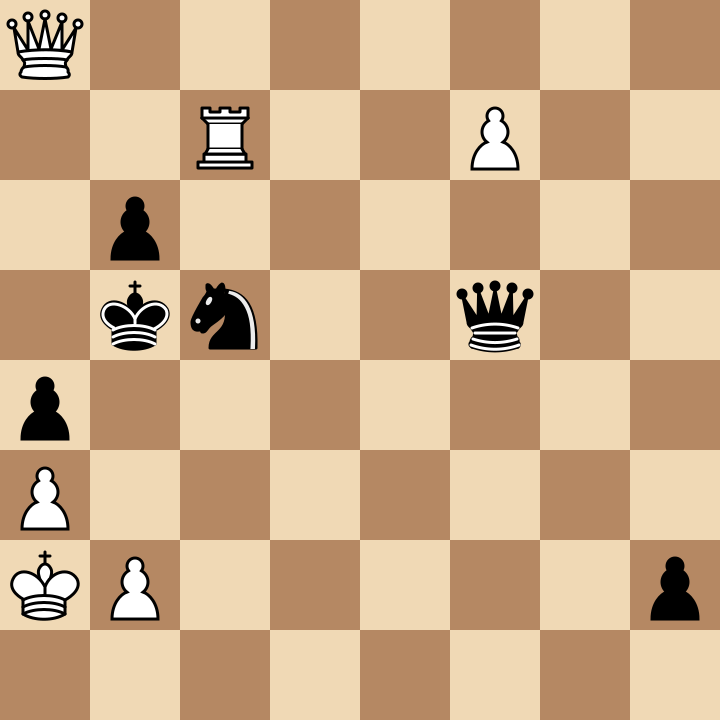
The last round in Toronto. Caruana needed a win to catch Gukesh at the top, and he had more than one check with his queen. He played 66.Qc6+, and the game was drawn. The other check, 66.Qe8+, won. Gukesh went to the World Championship match.
This is the slip CCT is built to stop: finding one good check and playing it. The rule is every check, then compare. Two years later, in round one of the 2026 Candidates, Caruana walked past another winning check, 67.Qe6+, played 67.f4, and still won the game.
Their captures: Ding's rook on f2
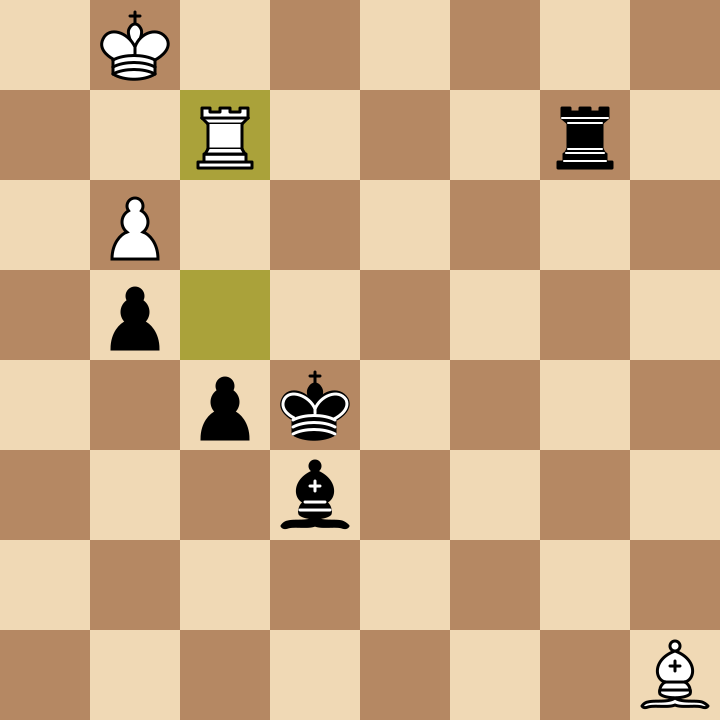
Game 14 of the 2024 World Championship, the last classical game, with the score level. Ding played 55.Rf2. Run the second half of CCT on that move, and one of Black's captures is 55...Rxf2. After 56.Kxf2 Bd5 the bishops come off too, and the pawn ending is lost for White. Gukesh played it, Ding resigned three moves later, and Gukesh became World Champion.
Their checks, even the silly ones: Carlsen against Ding
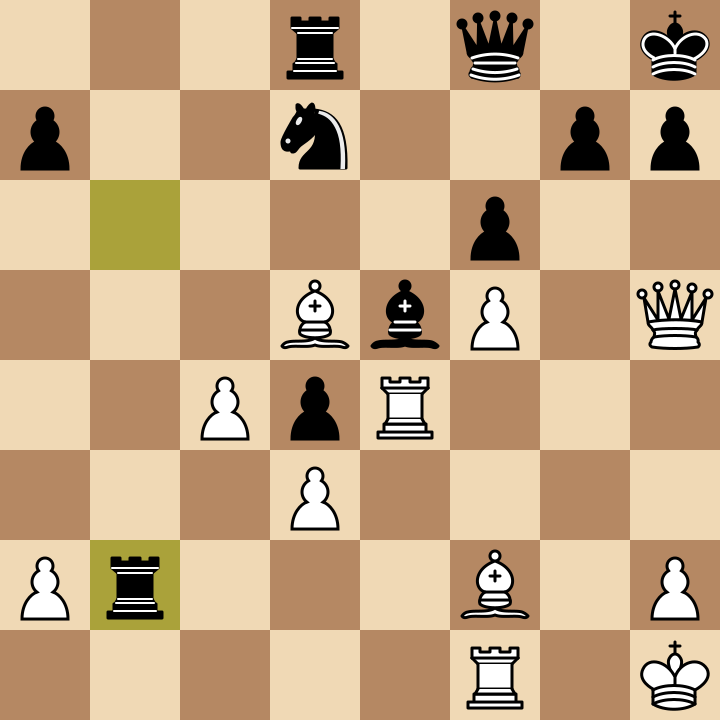
Norway Chess 2024. Ding's 29...Rb2 attacked the bishop and eyed the back rank, a threat of his own. The scan that mattered was White's: what checks does White have now? One of them is 30.Qxh7+, giving up the queen. After 30...Kxh7, 31.Rh4 is mate. Carlsen played it.
This is why CCT says every check. A queen sacrifice looks like a move to skip. On a list, it gets looked at like any other.
CCT with a clock
In a long game you can run the full list every move. In blitz you can't, and trying will cost you on the clock. Run it at least when:
- Your opponent's last move was a check, a capture or a threat.
- One of your pieces is undefended, or defended only once.
- A king is open, or a queen has just come close to one.
- Your move looks like it wins something. Ask what the other side gets back.
Those are the moments when one forcing move can change the game.
Three common slips
- Stopping at the first good move. Caruana found a check. The winning one was a different check.
- Only running it for yourself. Your move can be fine on its own and still leave something loose.
- Skipping quiet threats. Not every threat is a check or a capture. A move that sets up a fork or traps a piece next turn belongs on the list too.
How to practise CCT
CCT only helps when it runs without you having to remember it, and that takes practice on real positions.
- Pro Blunders: hundreds of positions where a grandmaster went wrong, including the three above. Free with a KingChess account.
- The free blunder check: paste a game and see where your move and Stockfish's parted.
- Your own games. KingChess reads your Chess.com or Lichess games, finds the mistakes you keep making, and brings those positions back as puzzles until the pattern sticks.
Find the moves you keep missing
KingChess finds the moves that cost you games on Chess.com or Lichess and drills them until the pattern sticks. Free, no signup needed.
Try KingChess freeFrequently asked questions
What does CCT stand for in chess?
Checks, captures and threats. It is the order to scan the board in before each move: the most forcing moves first, for you and for your opponent.
Is CCT only for beginners?
It is a principle taught to beginners and intermediates, but it never stops mattering. The three examples above are from World Championship, Candidates and Norway Chess games.
Is CCT the same as a blunder check?
It covers it. A blunder check is the second half of CCT: your opponent's checks, captures and threats after the move you are about to play. The first half looks for your own.
Why do checks come first?
A check forces a reply, so there are only a few lines to see. Looking at checks first means the sharpest lines get seen before the slow ones.
Should I use CCT in blitz?
Not on every move, there isn't time. Use it when the last move was forcing, when one of your pieces is loose, or when a king is open.